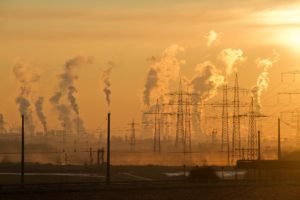
WASHINGTON, DC – February 7, 2024 – On February 7th, the Environmental Protection Agency (EPA) and the Biden Administration issued a new rule that sets tougher standards for soot pollution. Reducing fine particulate pollution (soot) from tailpipes, smokestacks and other industrial sources can improve America’s health. Soot inhalation is associated with many health problems including heart disease and lung cancer. Soot is the popular term for fine particulate matter up to 2.5 microns in diameter, much smaller than a human hair. When we inhale, these particles can travel to narrow passages in the lung.
EPA administrator Michael Regan said that the new restrictions can save $46 billion in health benefits and can prevent more than 4 thousand premature deaths and 800 thousand asthma attacks. Regan adds that vulnerable groups will benefit including children, seniors, persons with heart and lung disease, and persons suffering from environmental injustice from industrial pollution like low-resource and minority communities.
The rule sets an air quality level that states and counties must achieve to reduce pollution from motor vehicles, industrial sites, and wildfires. The most recent restrictions were set down 12 years ago by the Obama administration. The new rule sets maximum levels of 9 micrograms of fine particulate pollution per cubic meter of air, down from 12 micrograms. Technical improvements have allowed for soot restrictions to be lowered, so soot pollution has decreased by more than 40% since 2000.
The EPA will sample air quality to identify counties and regions that do not meet the new standard. Offending states will have 18 months to develop a compliance plan for those regions. Penalties will be imposed on states who do not meet the new standard by 2032. The EPA expects that almost every county in the U.S. will meet the standard. Each state EPA department will be able to develop local rules to target point-source polluters like power plants, specific motor vehicles, and other industrial sources.
According to the American Lung Association’s 2023 annual report, more than 60 million people live in counties that have polluted air from daily spikes of soot and almost 19 million persons live in counties whose air exceeds the annual limit for soot pollution. People of color were almost 4 times more likely than white people to live in a county with poor air quality.
Many industry groups feel that the stricter pollution restrictions can lead to loss of manufacturing jobs, threaten economic growth, and may result in the closure of power plants and refineries. However, President Biden disagrees. He told reporters on February 6th that “healthy people equal a healthy economy. We do not have to sacrifice people to have a prosperous and booming economy.”
Listen to the full report below:
Contact: Dr. Dick Needleman, Health reporter, 103.3 AshevilleFM, [email protected]
More Posts for Show: Asheville FM News Hour